






Application is closed





Exploring the intersection of culture and technology for success in an interconnected world.
 Non-credit
 Residential
 Commuter
 Accepts International Students
 Financial Aid
 Final project
 Application fee waiver
Program Overview
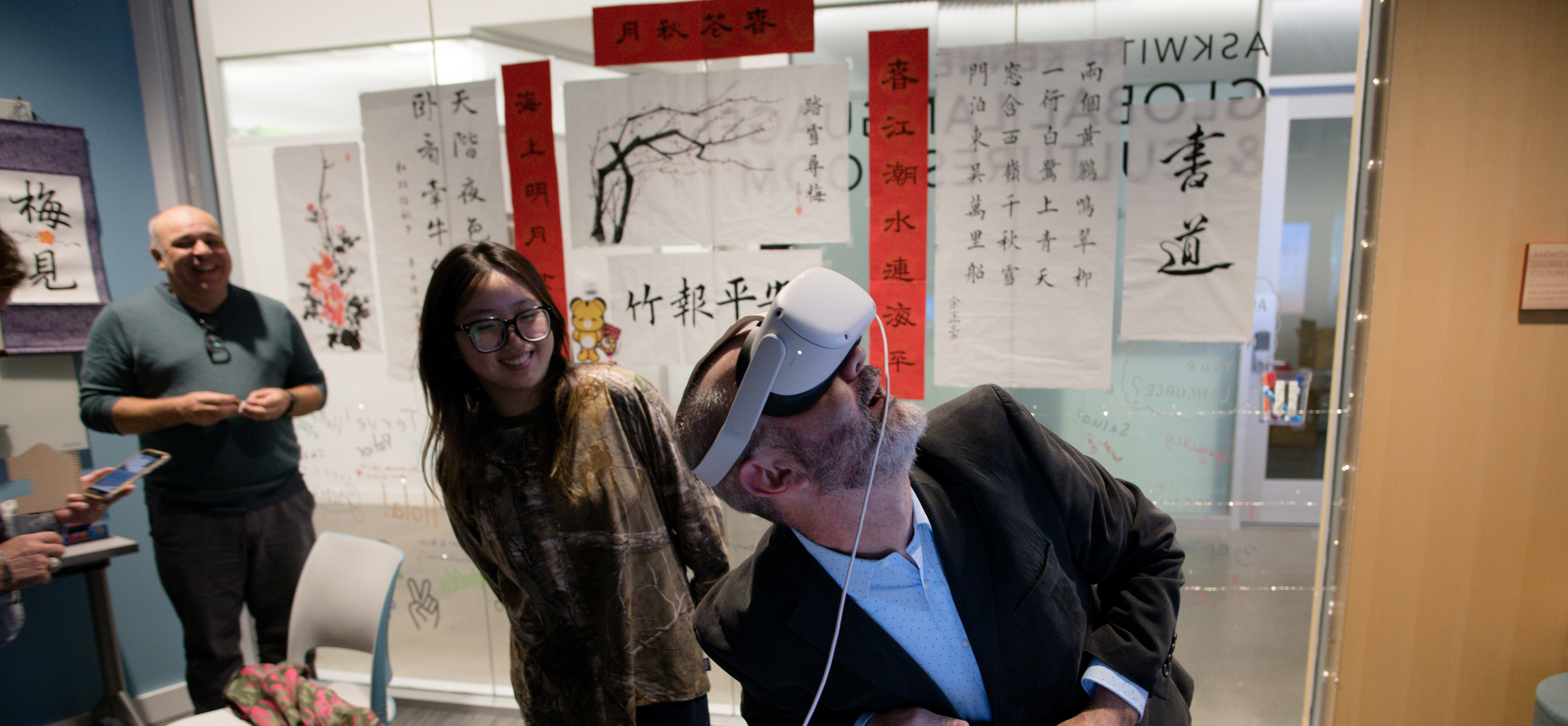
The Global Cultures and Emerging Technology (GCET) Program offers high school students a unique opportunity to explore the intersection of culture and technology. By participating in this program, students will develop critical thinking and intercultural communication skills, enhance their technical expertise, and cultivate their sense of global citizenship. Through a blend of foundational coursework and hands-on research/project labs, students will engage in interdisciplinary learning that prepares them for the complexities of a rapidly evolving world. This program fosters creativity, ethical technology development, and collaborative problem-solving, equipping students with the tools they need to succeed in an interconnected society.
Curriculum
Over five weeks, Global Cultures and Emerging Technology students will progress through three phases culminating in a unique interdisciplinary project to be showcased at a final symposium. Throughout the program, students will:
- explore interdisciplinary innovation that integrates the humanities (e.g., ethics, cultural studies) with cutting-edge technology (e.g., AI, VR/AR, robotics, game design) motivated by the desire to address global challenges through creative, human-centered solutions.
- build hands-on expertise in technical fields (e.g., AI, animation, VR/AR) and research methodologies, while analyzing the cultural and ethical implications of technological advancements.
- cultivate global citizenship by expanding awareness of global cultures and ethical responsibility in technology development, ensuring solutions are socially impactful.
- advance academic success by stengthening foundational knowledge, critical thinking skills, and interdisciplinary problem-solving skills - all essential to college-level work at the intersection of technology and global cultures.
- develop a multifaceted portfolio demonstrating technical and cultural fluency showcasing a unique interdisciplinary project featuring prototypes, digital exhibits, and/or creative works.
- build leadership, communication, and collaboration competence through small-group projects that blend diverse perspectives, guided by the expertise of faculty mentorship.
Phase 1: Foundational Coursework on Global Cultures
Weeks 1-2: Foundational Coursework on Global Cultures
This component features guest professors and cultural specialists who guide students in analyzing the cultural products, practices, and perspectives of diverse global communities, with a special focus on their relationship to technological development. Emphasizing critical thinking and intercultural communication, this core element prepares students to engage thoughtfully with the complexities of our interconnected world.
Phase 2: Research/Project Lab
Weeks 3-5: Research/Project Lab
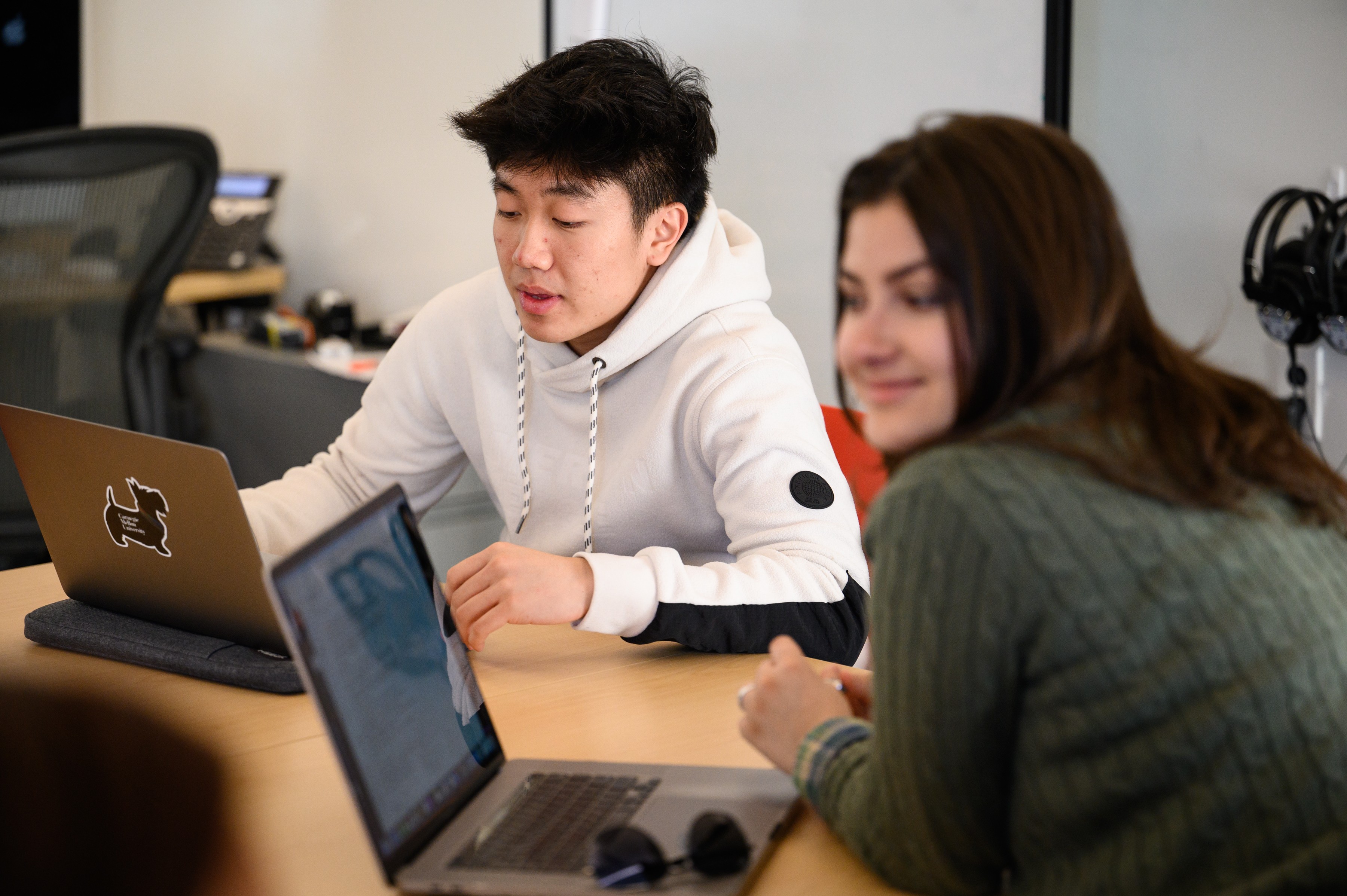
In this phase, students will apply their learning in Phase 1 to an interdisciplinary group research/project that merges global cultures with technological fields. Students will work in small groups of 4 to 6, each guided by 1 to 2 faculty mentors. During this phase, students will participate in the following activities:
Research/Project Methodology Workshops
These workshops offer foundational training in interdisciplinary research and project design, equipping students with the essential skills to conceptualize and execute their projects. Based on their group assignments, students will participate in one of the following workshops: XR, Robotics, AIGC, Animation, or Game Design.
Research/Project Labs
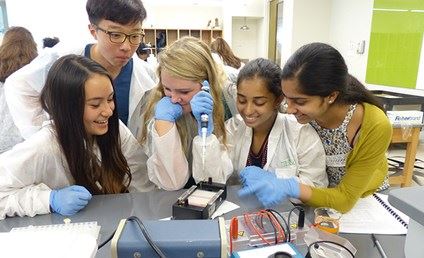
Following the workshops, students participate in one of the faculty-led labs where they collaborate in small teams under the guidance of faculty mentors and research assistants. Sample research/project labs proposed for Summer 2026 (subject to change) include:
- AI, Robotics, and the Future of Art Exhibitions
- Animating Language and Culture with Duolingo
- Revitalizing Historical Artifacts Through Game Design
Weeks 5: Research/Project Showcase and Symposium
The program culminates in a symposium where students present their interdisciplinary projects to faculty, peers, and industry guests. During the symposium, students articulate their research methodologies, theoretical frameworks, and ethical considerations, demonstrating their ability to communicate sophisticated ideas to diverse audiences.
End Product
Students will produce a portfolio that showcases their interdisciplinary studies, which will include, but are not limited to, the following deliverables:
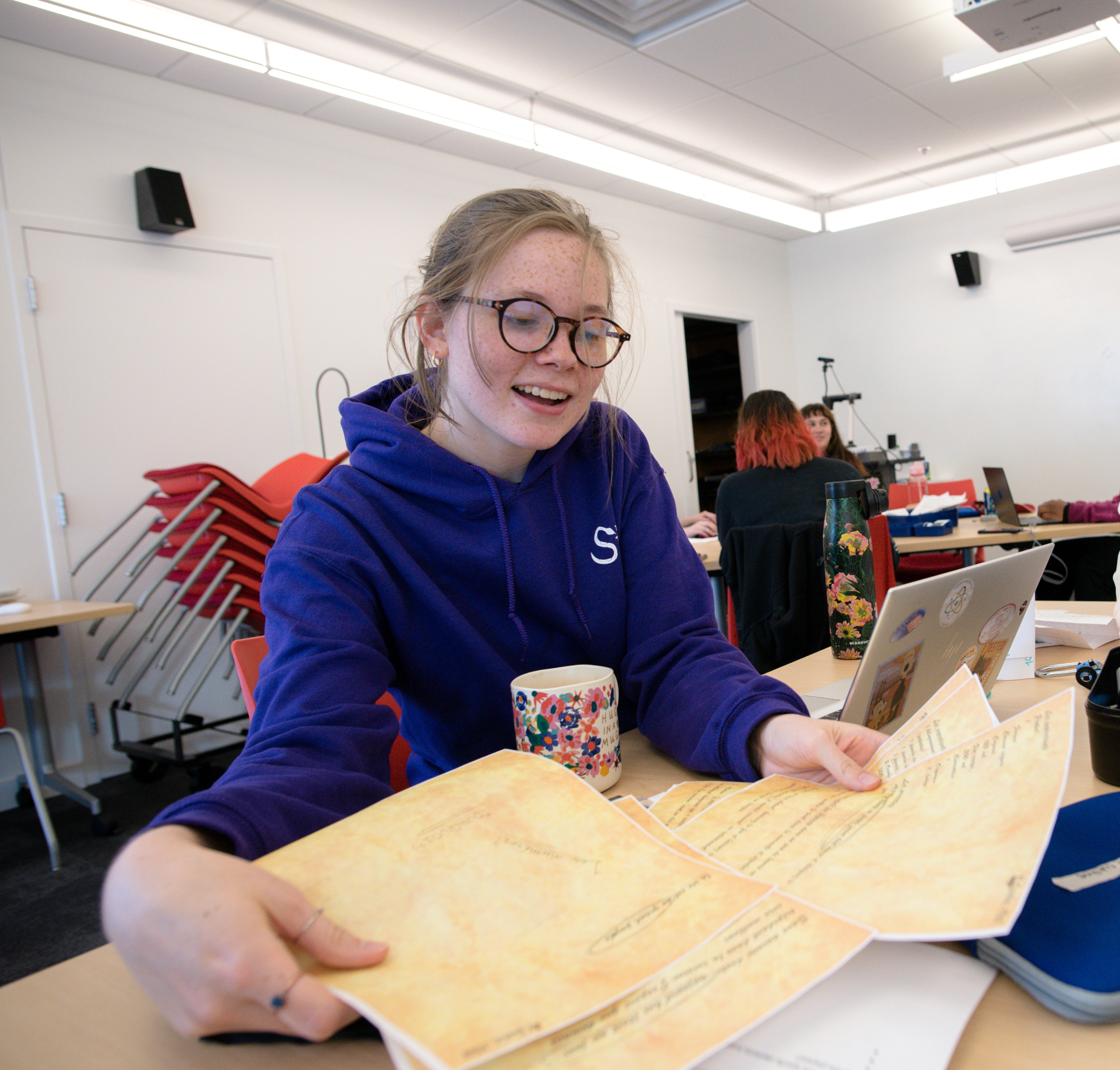
Group Research/Project Prototypes: Students will design and create functional prototypes related to their projects, demonstrating their ability to blend technological innovation with cultural insights. These prototypes may range from physical models to digital applications.
Documentation and Reflection: Students will maintain a detailed documentation of the entire research and project process, culminating in a reflective presentation that articulates their methodologies, key findings, and the implications of their work.
Digital Exhibits: Students will develop digital exhibits aimed at showcasing their projects and research. These exhibits will serve as a platform to engage a broader audience, using multimedia elements such as videos, animations, and interactive features to effectively communicate their findings.
College Preparatory Activities
The program offers coursework, workshops, and lab training designed to prepare students for the demands of college-level studies. The coursework emphasizes critical thinking and essential research skills. Through workshops and labs, students will apply theoretical knowledge in real-world contexts, enhancing their technical skills while fostering collaboration, technological innovation, and creative problem-solving.
At the end of the program, students will receive a collection of materials to enhance their portfolios, including a project prototype, professors' assessments and feedback, documentation of their learning process, and materials prepared for digital exhibits that highlight their work and insights. These comprehensive resources will serve as valuable assets as students prepare to transition into their college studies.
To be eligible for Pre-College GCET, students must:
- Be at least 16 years old by the program start date.
- Be a current sophomore or junior in high school at the time of application submission.
- Demonstrate interest in global cultures and technology through previous coursework or projects.
- Have a minimum GPA requirement: 3.5.
The complete application for Pre-College GCET consists of the following:
- Completed online application
- Unofficial transcript
- Standardized test scores (optional)
- One letter of recommendation
- Responses to essay prompts
Application Deadlines
- Early Deadline - February 1, 2026. Scholarship and international applications must be submitted by this deadline. Fixed admissions. Decisions sent on March 15.
- Final Deadline - March 1, 2026. Fixed admissions. Decisions sent on April 15.
Jun 20 - Jul 25
 5 weeks
 Residential
Jun 20 - Jul 25
5 weeks
Residential
Jun 20 - Jul 25
5 weeks
 Commuter
The cost includes:
Tuition for college-level classes taught by accomplished Carnegie Mellon University faculty.
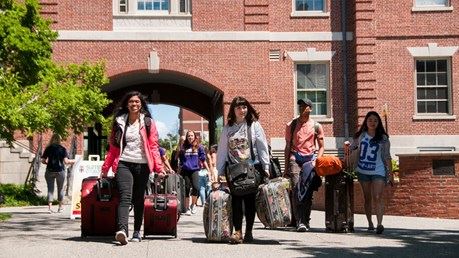
Housing on a vibrant and welcoming college campus (residential students only).
Dining Services that offer diverse eating options emphasizing health, wellness, and delicious food! Dining options include (but are not limited to) vegan, vegetarian, kosher, and Halal.
CMU ID Card with an Arts Pass providing free admission to a number of museums and venues in the Pittsburgh area.
Free transportation on the Pittsburgh Regional Transit (PRT) system to attend organized program activities, extra-curricular Student Affairs events, or to explore all that Pittsburgh has to offer.
Additional Fees
• Application Fee - $50
• Enrollment Deposit - $800
Application Fee and Enrollment Deposit are non-refundable.
Scholarships
Full scholarships covering tuition, housing, and dining are available to students demonstrating financial need. You can elect to be considered for a scholarship within the online application.
Please note: International students are not eligible for scholarship consideration.
Scholarship Eligibility
Be a U.S. citizen or permanent resident
Be available to attend the entirety of the program
Demonstrate financial need
Financial Need
Students in any of the below categories are considered to demonstrate financial need:
• Students who have received or are eligible to receive an ACT or SAT testing fee waiver.
• Students who are enrolled in or eligible to participate in the Federal Free or Reduced Price Lunch Program (FRPL).
• Students whose family income falls within or near the Income Eligibility Guidelines set by the USDA Food and Nutrition Service.
• Students who are enrolled in a federal, state, or local program that aids students from low-income families (e.g. TRIO programs such as Upward Bound).
• Students whose family receives public assistance.
• Students who live in federally subsidized public housing, a foster home, or are homeless.
• Students who are a ward of the state or an orphan.
• Students who can provide a supporting statement from a school official, college access counselor, financial aid officer, or community leader.
Documentation of financial need is required to be considered for scholarship opportunities in all available programs.
Documentation required includes tax documents or a completed NACAC Application Fee Waiver signed by your high school guidance department.


Application is closed

Useful Resources



Great!
Your subscribe request has successfully sent to the Carnegie Mellon University Pre-College Programs
Sehr gut!
Ihre Anfrage wurde erfolgreich abgesendet an Carnegie Mellon University Pre-College Programs
Tell us your
opinion about us