







 Unofficial Transcript
  Min GPA Requirement
  Several Essays
  1 Recommendation
  English Test C1-C2
  Online Application From
  Application Fee
  Standardized Test Scores *
 Work Sample *
 Activities List *


Application is closed




Discover the investigation, innovation, and impact of Design.
Design has never been in greater demand than it is now. Businesses, government, and local communities are turning to designers for innovation and problem-solving, creating new roles for designers in every sector of the marketplace.
 Non-credit
 Residential
 Commuter
 Accepts International Students
 Financial Aid
 Final project
Pre-College Design introduces students to the discipline of design, provides a foundation of skills, and gives a clear idea of what to expect from a college-level accredited program. Pre-College Design students will have the opportunity to attend classes taught by full-time Carnegie Mellon faculty where they are given an introduction to the design principles and practices that are the cornerstones of the undergraduate School of Design program.
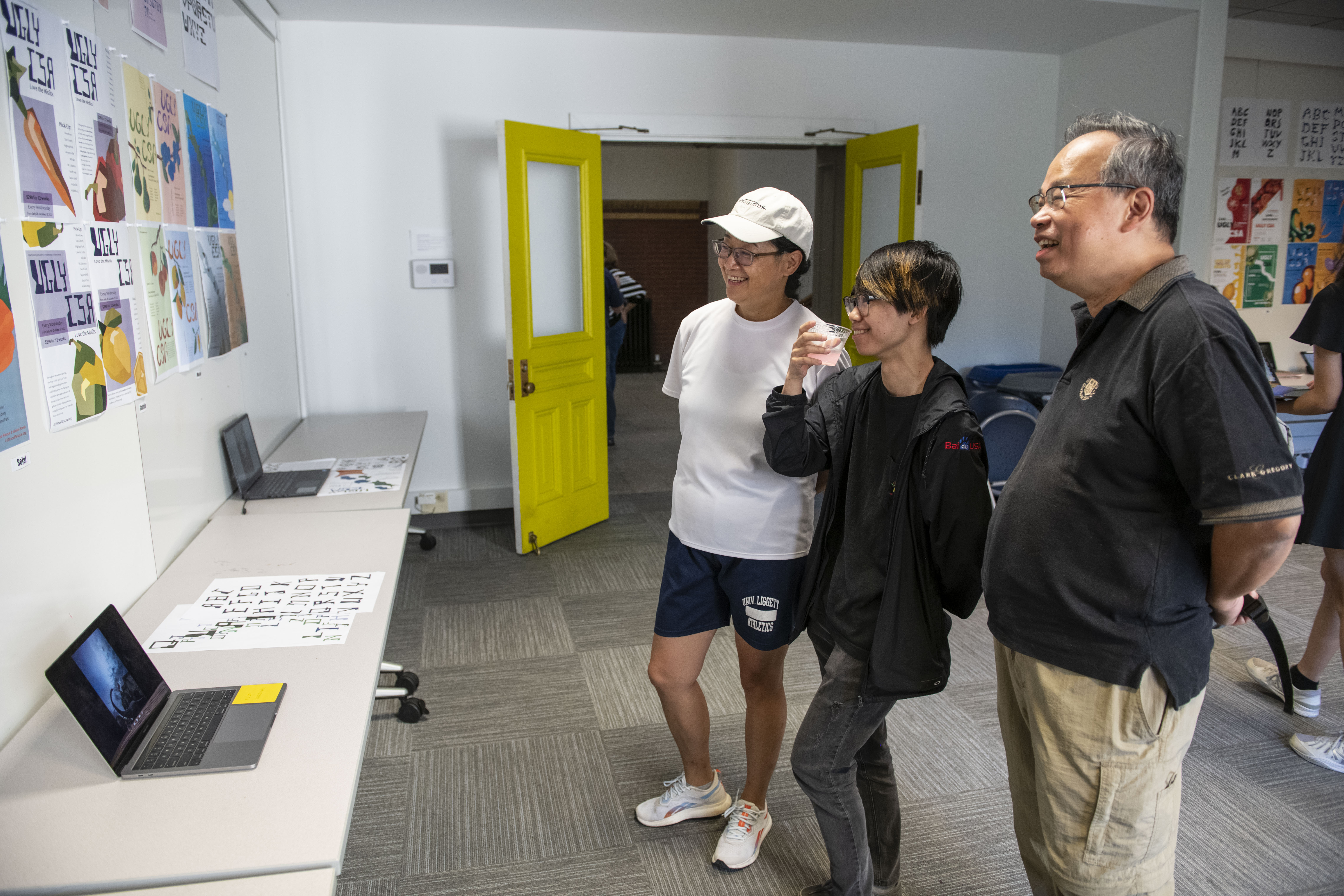
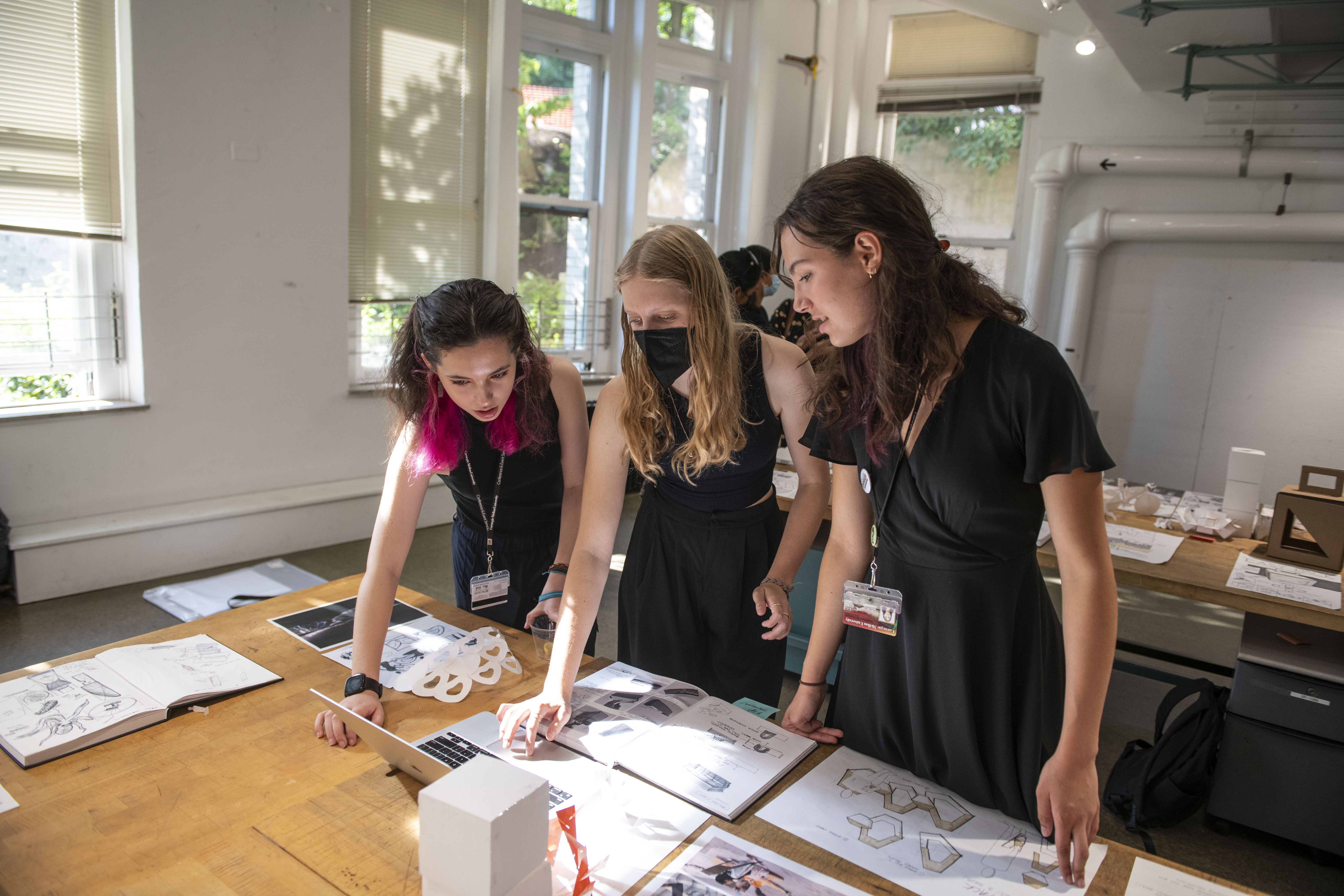
Modeled after the first-year college experience, sessions will consist of studio learning, lectures, and critiques, as well as guided work sessions with faculty. Students will be assigned their own personal studio space, providing them with their first foray into “studio life.” By the end of the program, participants will have portfolio pieces that have been critiqued by the School of Design faculty. There will also be a showcase that will feature all the work students have completed during the program, for fellow classmates, faculty, and parents to see.
Curriculum includes:
- Studio Design for Products, Communications, & Environments: Studio courses allow students to experience the iterative process designers use when developing their best solutions. Teachers guide students through the problem-solving process, introducing basic tools (i.e., sketching, diagramming, prototyping) along the way.
- Design Drawing: Design Drawing is a different way of drawing than fine art drawing. It is one of the ways designers work through their ideas and effectively share their thinking with others. Through guided exercises, students are introduced to ways in which they can make their drawings a stronger communication tool, as well as a useful part of the problem-solving process.
- Design Photography: In addition to the mechanics of using a camera, Design Photography teaches students how to effectively capture images that convey meaning and tell a story.
- Design Research & Problem-Solving Methods: Design Research & Problem-Solving Methods will serve as an introduction to the way designers gather meaningful data and to the tools required to apply that data to their design solutions.
On-campus: residential or commuter
Students receive a Design Kit from the CMU Art Store upon their arrival. The kit is included in the program cost.
Students are asked to bring a camera, and we prefer that you have a camera other than your smartphone. If you have access to an older camera that is at least 10 megapixels in which you can manually operate the focus, aperture, and shutter settings, you will be fine. Students who only have a smartphone camera will be accommodated.
A laptop that is capable of running Adobe Creative Cloud software is required.
Work created in this program may be excellent material to package for a student portfolio. At the conclusion of the program, faculty will be available to provide feedback on portfolios.
To be eligible for Pre-College Design, students must:
- Be at least 16 years old by the program start date.
- Be a current sophomore or junior in high school at the time of application submission.
- Have an academic average of B (3.0/4.0) or better.
- Previous experience in art or design is NOT required.
Unofficial Transcript
Min GPA Requirement
Several Essays
1 Recommendation
English Test C1-C2
Online Application From
Application Fee
Standardized Test Scores *
Work Sample *
Activities List *
The complete application for Pre-College Design consists of the following:
- Completed online application
- Unofficial transcript
- Standardized test scores (optional)
- One letter of recommendation
- Responses to essay prompts (included in the application)
- Portfolio (optional, but highly recommended). Please provide examples of work that relate to your interest in design. We understand submissions will vary and examples of direct design work are not necessarily possible. Please use your discretion. Five to 10 images of your original work in a single PDF file is preferred.
Application Deadlines
Early Deadline - February 1, 2026. Scholarship and international applications must be submitted by this deadline. 11:59pm EST. Fixed admissions. Decisions sent on March 15.
Final Deadline - March 1, 2026. Fixed admissions. Decisions sent on April 15.
Jun 20 - Aug 01
 6 weeks
 Residential
Jun 20 - Aug 01
6 weeks
Residential
Jun 20 - Aug 01
6 weeks
 Commuter
The cost includes:
- Tuition for college-level classes taught by accomplished Carnegie Mellon University faculty.
- Housing on a vibrant and welcoming college campus (residential students only).
- Dining Services that offer diverse eating options emphasizing health, wellness, and delicious food! Dining options include (but are not limited to) vegan, vegetarian, kosher, and Halal.
- CMU ID Card with an Arts Pass providing free admission to a number of museums and venues in the Pittsburgh area.
- Free transportation on the Pittsburgh Regional Transit (PRT) system to attend organized program activities, extra-curricular Student Affairs events, or to explore all that Pittsburgh has to offer.
Additional Fees
• Application Fee - $50
• Enrollment Deposit - $800
Application Fee and Enrollment Deposit are non-refundable.
Scholarships
Full scholarships covering tuition, housing, and dining are available to students demonstrating financial need. You can elect to be considered for a scholarship within the online application.
Please note: International students are not eligible for scholarship consideration.
Scholarship Eligibility
- Be a U.S. citizen or permanent resident
- Be available to attend the entirety of the program
- Demonstrate financial need
Financial Need
Students in any of the below categories are considered to demonstrate financial need:
• Students who have received or are eligible to receive an ACT or SAT testing fee waiver.
• Students who are enrolled in or eligible to participate in the Federal Free or Reduced Price Lunch Program (FRPL).
• Students whose family income falls within or near the Income Eligibility Guidelines set by the USDA Food and Nutrition Service.
• Students who are enrolled in a federal, state, or local program that aids students from low-income families (e.g. TRIO programs such as Upward Bound).
• Students whose family receives public assistance.
• Students who live in federally subsidized public housing, a foster home, or are homeless.
• Students who are a ward of the state or an orphan.
• Students who can provide a supporting statement from a school official, college access counselor, financial aid officer, or community leader.
Documentation of financial need is required to be considered for scholarship opportunities in all available programs.
Documentation required includes tax documents or a completed NACAC Application Fee Waiver signed by your high school guidance department.
Unofficial Transcript
Min GPA Requirement
Several Essays
1 Recommendation
English Test C1-C2
Online Application From
Application Fee
Standardized Test Scores *
Work Sample *
Activities List *
Application is closed

Useful Resources



Great!
Your subscribe request has successfully sent to the Carnegie Mellon University Pre-College Programs
Sehr gut!
Ihre Anfrage wurde erfolgreich abgesendet an Carnegie Mellon University Pre-College Programs
Tell us your
opinion about us